
Train the Trainer
Global Impact
Evidence-Based
Sector-Specific
Sustainable Skills
Capability & Confidence
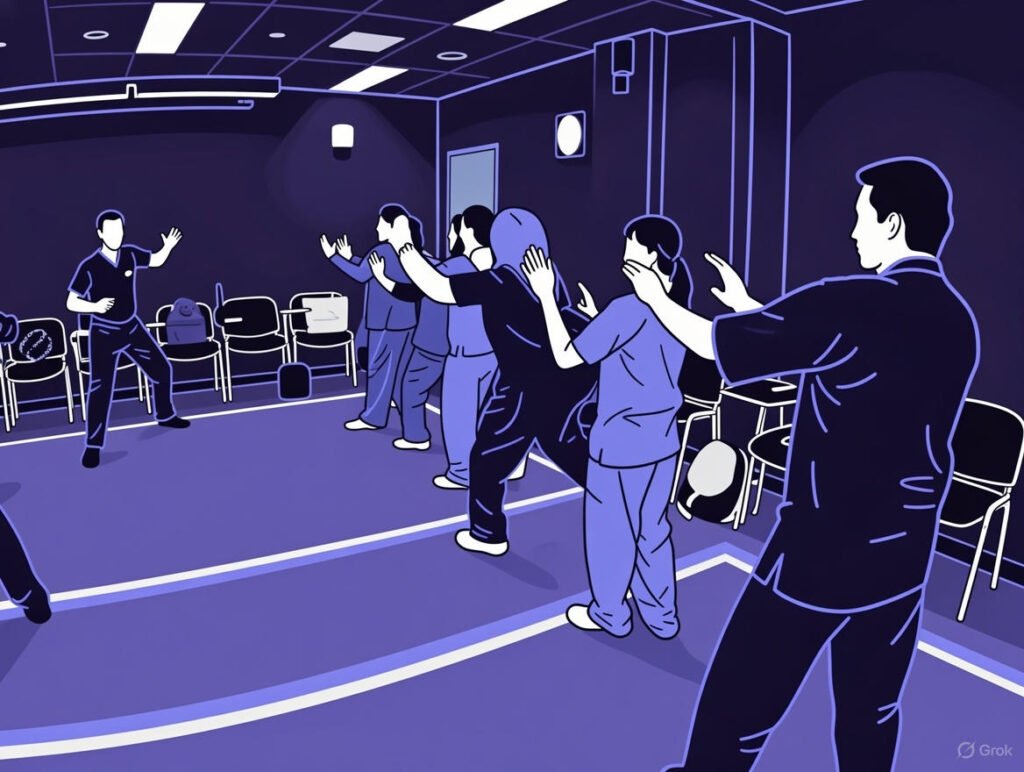
Without skilled in-house trainers, organisations risk unsafe interventions, legal exposure, and inconsistent standards — increasing harm to staff and service users.
01
Safety
02
Compliance
Stay aligned with legal, clinical, and sector-specific standards.
03
Culture
Build a positive, confident approach to managing high-risk situations.
One Framework, Many Applications
Research-Led
Developed over a decade with Loughborough University, tested in multiple sectors, published in peer-reviewed journals.
Real-World Proven
Adopted by the College of Policing for all forces in England and Wales, and implemented internationally.
Sector Profiles
Evidence-based programme variations for education, healthcare, social care, policing, and more.
Continuous Growth
Individual development plans, CPD pathways, and performance tracking.
Course Outline & Goals
Develop the awareness, judgement, and practical skills needed to prevent, manage, and survive high-risk lone working situations
Course Title
Positive Handling Train-the-Trainer: Creating Internal Capacity for Safer Environments in Schools and Care Settings
Course Aim
To develop skilled internal trainers who can effectively teach staff in schools and care homes to manage challenging behaviors with dignity and respect, ensuring physical intervention is used only as a last resort while maintaining safety for all.
Learning Outcomes
By the end of this 5-day course, participants will:
Know:
- The context and legal basis of positive handling in schools and care settings, including Human Rights Act considerations
- The Seven Phases of Crisis (Kaplan Wheeler) and the SCARF Model for understanding behavior
- Risk factors and warning signs when using physical interventions
- Health and Safety implications and good-practice guidance for managing high-risk incidents
- Training delivery methodologies including scenario-based learning and adult education principles
- Course administration procedures and documentation requirements for trainer-led sessions
Understand:
- The principles of dignity and respect in all interactions with vulnerable people
- The importance of transforming a culture of fear to a culture of care through effective training
- The difference between emergency and planned interventions
- How to build trainer credibility and establish effective learning environments
- The ethical considerations in avoiding coercion and blanket restrictions
- How to conduct a Training Needs Analysis to tailor content to specific environments
- How to select appropriate scenarios and vehicles for learning based on common high-risk situations
Be able to:
- Deliver comprehensive training on non-escalation, de-escalation, and crisis management strategies
- Teach and assess practical physical intervention skills appropriate for lower-risk environments
- Design scenario-based learning experiences tailored to specific settings (schools or care homes)
- Adapt training content to address the specific needs of different staff teams and service user groups
- Conduct effective skills assessments and provide constructive feedback to learners
- Create and maintain proper training documentation and certification records
- Monitor, evaluate, and continuously improve training effectiveness
Course Duration
5 days of in-person train-the-trainer course delivery, with potential pre-course online learning components to maximize in-person practice time
Target Audience
Selected staff with appropriate experience, energy, and motivation to become internal trainers within schools and care homes for older people. Ideal candidates have extensive experience with their specific service users and understand common flashpoints and effective de-escalation strategies.
Learning Methodologies
- Pre-loading: Online video-based training to introduce key concepts before face-to-face sessions
- Transfer week: Face-to-face training with Dynamis mentors and practice taking on the trainer role
- Projects week: Trainees practice delivering core components of knowledge-based elements
- Scenario-based learning using situations relevant to participants’ environments
- Practical skills assessment and feedback
- Supervised teaching practice
Tailoring and Relevance
The program is specifically designed to develop trainers who can address the unique challenges faced in lower-risk environments like schools and care homes for older people. The training focuses on scenario-based learning using situations directly relevant to these settings, ensuring all physical techniques are appropriate for the service users involved.
Legal and Medical Review
All training content is tactically effective, legally correct, and medically safe, supported by Dynamis’ legal and medical audits. The physical intervention techniques taught have been reviewed to ensure they would withstand scrutiny in legal proceedings.
Trainer Qualifications and Credibility
The course is delivered by Dynamis trainers who are full-time, qualified, and insured professionals. All hold recognized qualifications in Adult Education and Level 3 Qualifications in Physical Intervention. Dynamis is accredited for quality assurance with the Institute of Conflict Management (ICM) and holds a 5-star ‘Safety Without Compromise’ rating.
Resources Provided
- Training Needs Analysis documentation
- Policy review guidance
- Access to a “Resources” folder with instructional videos, templates, case-law samples, and other tools
- Ongoing telephone support from the Dynamis training team for safety queries
- Complete trainer materials to deliver the training within their organization
Monitoring and Evaluation Plan
The effectiveness of the program is measured through participant satisfaction, skill demonstration, and organizational impact metrics such as reduction in incidents. This data feeds back into continuous improvement of both the train-the-trainer program and the internal training delivered by graduates of the program.
Reinforcement and Ongoing Learning
Graduates receive ongoing support from Dynamis, including access to updated resources and telephone consultation for complex cases. Regular CPD opportunities help maintain trainer skills and ensure content remains current with evolving best practices and legal requirements.
Course Title
Advanced Positive Handling Train-the-Trainer: Comprehensive Intervention Skills for High-Risk Healthcare, Secure and Specialist Settings
Course Aim
To develop expert internal trainers capable of teaching staff in high-risk environments to manage severe challenging behaviours and violence safely, ethically, and effectively, with a comprehensive tactical repertoire that includes clinical holding, chemical interventions, and seclusion procedures, while maintaining dignity and respect for vulnerable individuals.
Learning Outcomes
By the end of this 10-day comprehensive programme, participants will:
Know:
- The extended legal framework governing restrictive practices in high-risk settings, including Mental Health Act, Mental Capacity Act, Deprivation of Liberty Safeguards, and human rights legislation
- The comprehensive range of risk factors in managing acute behavioural disturbance (ABD), psychosis, substance-induced states, and other high-risk presentations
- Advanced clinical knowledge of psychological and physiological responses to restraint, including positional asphyxia, excited delirium, and restraint-associated cardiac arrest
- Pharmacological interventions, their mechanisms, indications, contraindications, and monitoring requirements when used as part of a behavioural management strategy
- The medical, ethical, and legal considerations for seclusion and long-term segregation, including environmental safety requirements
- Robust documentation requirements for recording, reporting, and reviewing incidents involving restraint, rapid tranquilisation, or seclusion
- Post-incident management protocols, including debriefing methodologies and trauma-informed approaches to support both staff and service users
Understand:
- The complex ethical balance between duty of care, risk management, and the fundamental rights and dignity of vulnerable individuals
- The psychological impact of trauma, adverse childhood experiences, and institutional settings on behavioural presentation and intervention effectiveness
- The correlation between environmental factors, staff approaches, and the escalation or de-escalation of behavioural crises
- The importance of functional behaviour analysis in developing proactive intervention strategies for individuals with complex needs
- How different mental health conditions, neurodevelopmental disorders, and substance abuse issues affect behavioural presentation and intervention selection
- The principles of trauma-informed care when working with populations who have experienced significant adverse life events
- The critical importance of prevention strategies and positive behaviour support plans in reducing the need for physical interventions
- The psychological impact on staff of managing severe violence and the importance of organisational support systems
Be able to:
- Deliver comprehensive training on an extended range of physical interventions appropriate for various high-risk scenarios, including responses to weapons, multiple aggressors, and extreme violence
- Teach and assess clinical holding techniques for safe medication administration to resistant individuals
- Facilitate realistic scenario-based training incorporating the complexities of high-risk environments, including limited space, environmental hazards, and multiple service users
- Instruct on proper monitoring procedures during and after physical interventions, including vital signs assessment and recognition of medical emergencies
- Develop and deliver training on seclusion protocols, including assessment for suitability, implementation procedures, and ongoing monitoring requirements
- Adapt training for specific environmental constraints such as secure wards, confined spaces, and areas with limited staff resources
- Conduct thorough post-incident reviews that inform practice improvement and risk reduction strategies
- Design tailored training for specific client groups with unique risk profiles (forensic, acute psychiatric, learning disabilities with challenging behaviour, etc.)
- Integrate robust physical skills with verbal de-escalation and environmental management strategies as part of a comprehensive approach
Course Duration
10 days of intensive, immersive training with a progressive structure that builds from theoretical foundations to complex scenario management and supervised teaching practice.
Target Audience
Experienced professionals from high-risk settings who demonstrate exceptional aptitude in behaviour management, risk assessment, and communication skills. Ideal candidates have substantial experience in managing serious incidents and possess the credibility, resilience, and emotional intelligence necessary to lead training in high-pressure environments.
Learning Methodologies
- Advanced scenario-based learning utilising high-fidelity simulations of complex, high-risk incidents
- Progressive skill development with regular competency assessment
- Team-based intervention practice mirroring real-world staffing configurations
- Video analysis of intervention techniques with biomechanical and safety assessments
- Supervised teaching practice with structured feedback
- Case study analysis of serious incidents to identify learning points and preventative strategies
- Role-play exercises to develop clinical decision-making under pressure
- Simulated emergencies requiring rapid assessment and intervention
Tailoring and Relevance
This programme is specifically designed for environments where staff face elevated risks of serious violence, including secure mental health units, forensic settings, specialist learning disability services managing extreme challenging behavior, psychiatric intensive care units, and high-dependency healthcare settings. The content addresses the unique challenges of managing acute behavioral disturbance, psychosis, substance-induced aggression, and personality-related violence within the constraints of clinical environments.
Legal and Medical Review
All intervention techniques, clinical holding procedures, and protocols for chemical and environmental interventions have undergone rigorous review by legal experts specializing in mental health and capacity law, alongside medical professionals with expertise in restraint-related risks. The programme meets or exceeds all relevant national standards and regulatory requirements for restrictive interventions in healthcare settings.
Trainer Qualifications and Credibility
The programme is delivered by Dynamis master trainers with extensive frontline experience in high-risk environments and advanced qualifications in healthcare, behavioral management, and adult education. All lead trainers hold relevant clinical qualifications alongside specialized certifications in managing violence and aggression in healthcare settings.
Resources Provided
- Comprehensive trainer manuals with detailed technical guidance
- Digital resource library including assessment tools, lesson plans, and presentation materials
- High-quality instructional videos demonstrating proper technique execution
- Risk assessment templates and decision-making frameworks
- Policy development guidance for restraint, rapid tranquilization, and seclusion
- Post-incident review and debriefing protocols
- Ongoing access to technical support and clinical consultation
Monitoring and Evaluation Plan
A multi-tiered evaluation framework assesses both trainer competency and organizational impact through:
- Pre and post-course knowledge assessment
- Structured observation of teaching practice
- Technical skills assessment under various conditions
- Implementation monitoring through site visits and remote support
- Collection and analysis of incident data to measure intervention effectiveness
- Feedback from frontline staff receiving training from programme graduates
- Regular refresher and update sessions to maintain standards and address emerging issues
Reinforcement and Ongoing Learning
Graduates receive continuing professional development opportunities including quarterly updates on evolving best practices, emerging research, and changes to legal frameworks. An online community of practice facilitates peer support and shared learning, while regular skills maintenance workshops ensure technical proficiency is maintained at the highest standards.
Course Title
Positive Behaviour Support: Understanding, Preventing, and Responding to Challenging Behaviour
Course Aim
To equip professionals with the knowledge, understanding, and practical skills needed to prevent, de-escalate, and respond to challenging behaviours using person-centered, trauma-informed approaches that maintain dignity while ensuring safety for all involved.
Learning Outcomes
By the end of this course, participants will:
Know:
- The legal and ethical frameworks governing behaviour support, including duty of care and human rights considerations
- The Seven Phases of Crisis model (Kaplan-Wheeler) and intervention strategies appropriate to each phase
- The principles of Positive Behaviour Support (PBS) and the functions of challenging behaviour
- The components of effective ABC (Antecedent-Behaviour-Consequence) analysis
- The Non-Escalation, De-Escalation and Crisis Mangement framework for conflict management
- The SCARF model and its application to understanding threat responses
- Safe systems of work for behavioural interventions in various settings
Understand:
- How behaviour serves as communication and the importance of asking “What is this person trying to tell us?”
- The impact of trauma on behaviour and the principles of trauma-responsive care
- The relationship between quality of life improvements and reduction in challenging behaviours
- How environmental factors, staff approaches, and communication styles can trigger or prevent escalation
- The importance of seeing situations from the service user’s perspective
- How power imbalances and institutional practices can contribute to challenging behaviours
- The difference between reactive strategies and proactive, preventative approaches
- The connection between staff wellbeing and effective behaviour support
Be able to do:
- Apply the “Three Essential PBS Questions” when analyzing challenging situations
- Conduct thorough ABC analyses to identify patterns and functions of behaviour
- Develop person-centered behaviour support plans that address underlying needs
- Implement appropriate de-escalation techniques during each phase of crisis
- Apply the Non-Escalation, De-Escalation and Crisis Mangement for conflict prevention and management, including:
- Active listening with all senses
- Using appropriate non-verbal and para-verbal communication
- Implementing effective redirection techniques
- Maintaining appropriate proxemics and personal space
- Applying the “one voice” principle during crisis situations
- Create individualised prevention strategies based on motivational, ecological, and mediator analyses
- Respond to early warning signs to prevent escalation
- Execute appropriate tertiary strategies when prevention has failed
Course Duration
- Full-day (6 hours): Comprehensive behaviour support training
- Half-day (3 hours): PBS fundamentals with focus on prevention and de-escalation
- Two-day (12 hours): Advanced program including physical intervention techniques (when appropriate)
Target Audience
- Support workers and care staff in health and social care settings
- Educational professionals working with challenging behaviour
- Mental health practitioners
- Residential care staff
- Any professionals supporting individuals with complex behavioural needs
Learning Methodologies
- Case-based learning using the “Game Time” scenario to develop empathy and understanding
- Role-playing of common workplace scenarios to practice de-escalation skills
- Analysis of real-world ABC charts and development of behaviour support plans
- Video analysis of crisis situations with guided reflection
- Small group activities applying the Seven Phases model to actual workplace challenges
- Skill-building exercises for conflict prevention and management
- Reflective practice sessions to connect theory with personal experience
Tailoring and Relevance
Training is specifically designed based on your organisation’s unique needs through a comprehensive Training Needs Analysis. Content is tailored to address the specific challenges faced by your staff and the individuals they support, with customised scenarios relevant to your setting.
Legal and Medical Review
All physical techniques and intervention strategies have undergone rigorous risk assessment for both practicality and safety, with attention to potential impacts on both staff and service users. The training aligns with relevant legal frameworks and best practice guidelines.
Trainer Qualifications and Credibility
Delivered by experienced professionals with expertise in PBS, conflict management, and crisis prevention. Our trainers have practical experience in behaviour support implementation and maintain current certification in relevant methodologies.
Resources Provided
Participants receive comprehensive reference materials including:
- ABC analysis templates and guidance
- Behaviour support plan frameworks
- Crisis prevention checklists
- De-escalation strategy cards
- Reflective practice guides
- Access to ongoing support resources
Monitoring and Evaluation Plan
Course effectiveness is measured through:
- Pre and post-training knowledge assessments
- Practical skill demonstration during training
- Follow-up evaluation of implementation in the workplace
- Data collection on incident reduction and prevention successes
- Regular review of behaviour support plans created post-training
Reinforcement and Ongoing Learning
The course includes strategies for maintaining skills through practice and reflection, with optional follow-up coaching sessions to ensure sustained application of techniques. Organisations can access refresher modules focused on specific aspects of behaviour support.
This behaviour support training is built on the understanding that all behaviour is communication and that effective support requires a balance of proactive strategies and appropriate responses. The person-centred approach ensures that participants develop practical skills they can immediately apply in their work environments, resulting in improved outcomes for both service users and staff.
Course Title:
Advanced Strategies in De-escalation: A Masterclass for Challenging Situations
Course Aim:
To equip staff working in acute, intensive care, and emergency department environments with advanced knowledge, understanding, and practical skills to effectively manage challenging situations involving people with acute mental health difficulties, using trauma-informed approaches that preserve dignity while ensuring safety.
Course Duration: 2 days
Target Audience: Healthcare professionals working in PICU, acute, and emergency department settings who may encounter people with acute mental health difficulties, including nurses, support workers, security personnel, and clinical staff.
Learning Outcomes:
By the end of this course, participants will:
Know:
- The Seven Phases of Crisis (Kaplan Wheeler) and how they manifest in acute mental health situations.
- Legal frameworks including duty of care, necessity, and proportionality in healthcare settings.
- Risk factors and warning signs specific to escalating behaviours in people with acute mental health difficulties.
- Gateway behaviours that indicate potential escalation.
- Trauma-informed approaches and their evidence base.
- The relevant aspects of the Human Rights Act as they apply to healthcare interventions.
- The SCARF Model and its application in managing distressed individuals.
- The proper response protocols when called to disturbances in healthcare settings.
Understand:
- The principles of trauma-informed care and person-centred approaches for patients with acute mental health difficulties.
- The importance of staff wellbeing and emotional equilibrium when managing challenging situations.
- The difference between conflict and crisis behaviours in patients with mental health difficulties.
- The ethical considerations in avoiding coercion and blanket restrictions in acute care environments.
- How trauma affects a person’s behaviour and responses during crisis situations.
- The difference between emergency and planned interventions in mental health care settings.
- How to recognise when team members may need assistance to remain professional.
- Decision-making processes under pressure in high-stakes healthcare encounters.
Be able to:
- Identify early warning signs and gateway behaviours to prevent escalation.
- Apply advanced de-escalation and non-escalation techniques in complex situations.
- Use trauma-informed and person-centred approaches to defuse risk and preserve dignity.
- Communicate and coordinate effectively as a team during incidents.
- Reflect on incidents using structured tools for personal and organisational growth.
- Maintain emotional equilibrium and support wellbeing for both staff and patients.
- Take appropriate action when verbal methods fail, knowing legal and safety boundaries.
- Approach and engage persons with cognitive difficulties using the five-step crisis intervention pathway.
- Implement the “First Responder Philosophy” for proper incident management.
- Intervene ethically when professionally difficult situations arise within the team.
Learning Methodologies
The course utilises a variety of teaching methods including classroom instruction, practical role-play, realistic scenario-based practice, and hands-on skills development. Participants will engage with lived experience experts and practise in contexts specifically designed to reflect the unique challenges of acute, intensive care, and emergency department environments. The SCENA approach (Scenario, Coaching, Engagement, Non-linear learning, and Assessment) ensures transfer of skills to real-world operations through progressively complex scenario practice.
Tailoring and Relevance
This training is specifically designed and tailored to the unique roles, tasks, and problems faced by healthcare staff working in high-pressure environments with patients experiencing acute mental health difficulties. Scenarios and examples are drawn from PICU, acute care, and emergency department settings, including situations involving bereavement, delirium, psychosis, and trauma. The course addresses specific challenges such as managing patients who may be highly distressed, paranoid, or experiencing psychotic episodes.
Legal and Medical Review
All content is tactically effective, legally correct, and medically safe, with specific attention to the particular risks and considerations present when working with people experiencing acute mental health difficulties in healthcare environments. Training includes awareness of risks of sudden death proximal to restraint and emphasises the importance of maintaining safety while respecting human rights.
Trainer Qualifications and Credibility
The course is delivered by expert facilitators from Dynamis and Vistelar with decades of experience in conflict management, trauma-informed practice, and advanced de-escalation, trusted by NHS Trusts and other leading healthcare organisations. Our trainers have demonstrated expertise in brain injury, empathic communication, and the physiology of threat response.
Resources Provided
Participants receive comprehensive course materials, reference guides for post-training implementation, and access to ongoing support resources to reinforce learning after the course. Takeaway tools include pocket reference cards, access to short reinforcement videos, and brief team-based exercises that can be implemented in the workplace.
Monitoring and Evaluation Plan
The effectiveness of the training is measured through participant satisfaction surveys, pre and post-course knowledge assessments, and follow-up evaluation of incident rates and staff confidence levels in the workplace. Success will be measured by improved patient experience, reduced incidents, decreased staff injuries, and enhanced staff confidence and morale.
Reinforcement and Ongoing Learning
Learning is reinforced through structured debriefing tools, team reflection practices, and ongoing support resources that help maintain skills and prevent complacency over time. A programme of sustainment ensures both short-term impact and ongoing sustained improvement in your healthcare environments, with champions identified to help embed the learning within teams.
Proven Impact
Trainer certification rate
“The methodology is adaptable, evidence-based, and delivers measurable change in frontline capability.”
College of Policing
End-to-End Support


Your Journey

DISCOVER

TRAIN

SUSTAIN
Apply skills, track results, continue CPD
Case Study – PICU project

Frequently Asked Questions
How is the programme adapted?
Is it evidence-based?
Which sectors use it?
How is success measured?
What comes after training?
Programme Guide
See sector profiles, module structure, and global case studies.
Contact Us
Talk to us about your sector’s training needs