
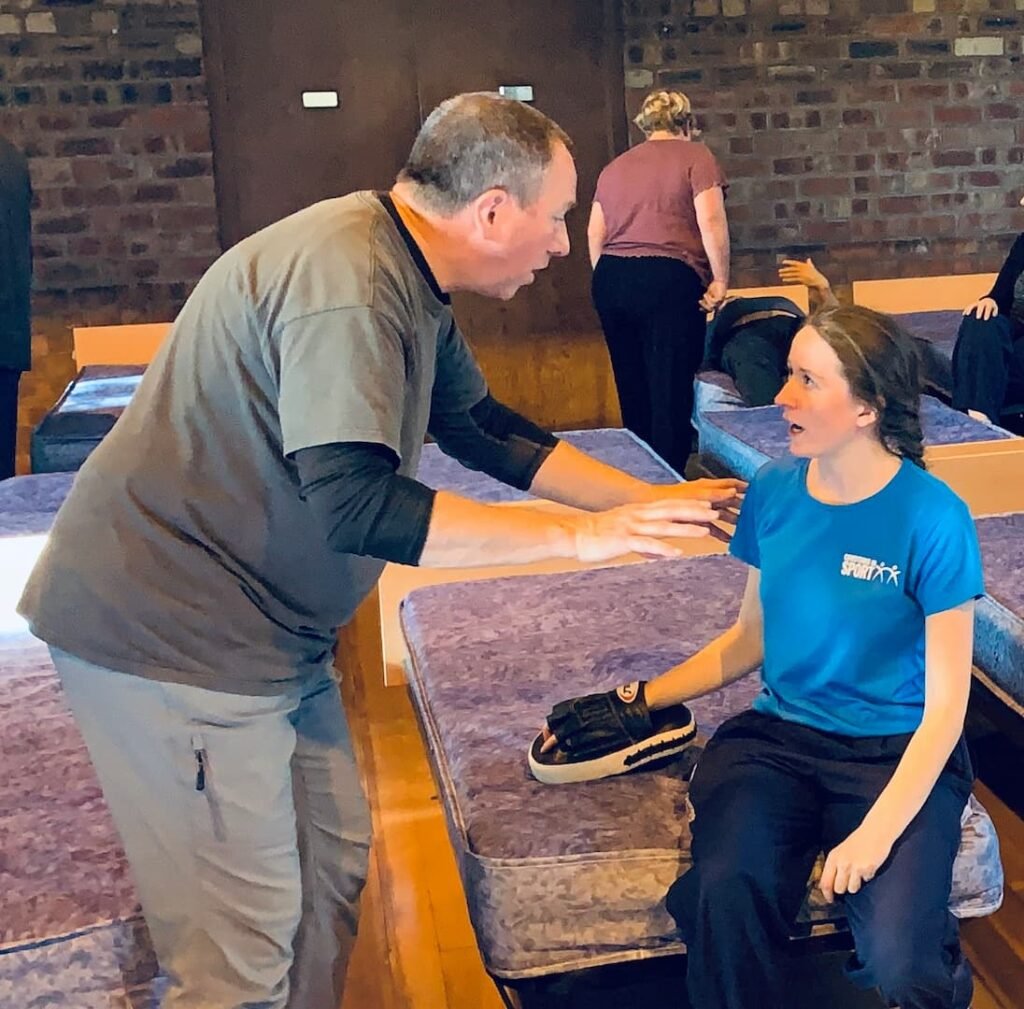
The partnership between Dynamis and KMAT represents a comprehensive approach to addressing the complex needs of educational establishments in managing conflict and challenging behavior. This article delves into the structure of our engagement, the implementation plans, feedback received, and the roadmap for future collaboration.
Our relationship with KMAT began with a clear recognition of the challenges faced by educational staff in managing challenging behavior and potential conflicts. The engagement was structured around three key pillars:
This structured approach ensured that the partnership addressed immediate concerns while building long-term capacity within the organization.
The implementation strategy was carefully phased to maximize impact while minimizing disruption to educational activities:
Initial assessment of KMAT’s specific needs across different educational settings, including:
Delivery of foundational training programs focused on:
Systematic integration of new approaches into organizational policies and procedures:
The feedback from KMAT has been consistently positive, highlighting several key areas of satisfaction:
“The transformation in our staff’s confidence when facing challenging situations has been remarkable. They now approach difficult scenarios with a toolkit of strategies rather than apprehension.”
This increased confidence has translated into measurable outcomes:
“Working with Dynamis has helped us develop policies that are not only compliant with current legislation but are also practical and accessible to staff at all levels.”
The collaborative policy development has resulted in:
“What sets the Dynamis approach apart is its practical nature. The techniques taught are immediately applicable in real-world educational settings, not just theoretical concepts.”
This practicality has been evidenced through:
Building on the strong foundation established, the partnership with KMAT is set to evolve in several key directions:
Development of specialized training modules addressing:
Expansion of training delivery methods to include:
Collaborative research initiatives focused on:
Exploration of how behavior management strategies can be integrated with:
The partnership between Dynamis and KMAT exemplifies how a structured, comprehensive approach to behavior management can transform educational environments. By combining practical training, policy development, and ongoing support, the engagement has created lasting change in how challenging behavior is understood and managed.
As the partnership continues to evolve, the focus remains on innovation, adaptation, and continual improvement to meet the changing needs of educational communities. The foundation of mutual trust and demonstrated impact provides a strong platform for further development, ensuring that staff and students benefit from the most effective approaches to creating safe, supportive learning environments.
Through this collaborative approach, both organizations continue to demonstrate their commitment to excellence in education and the wellbeing of all members of the school community.
Download our Positive Handling starter guide for schools.
Ready to explore Positive Handling training for your staff team? Let’s talk today.
What do you need? Use our simple tool to find the most relevant training and support options for your role, sector and challenges.