
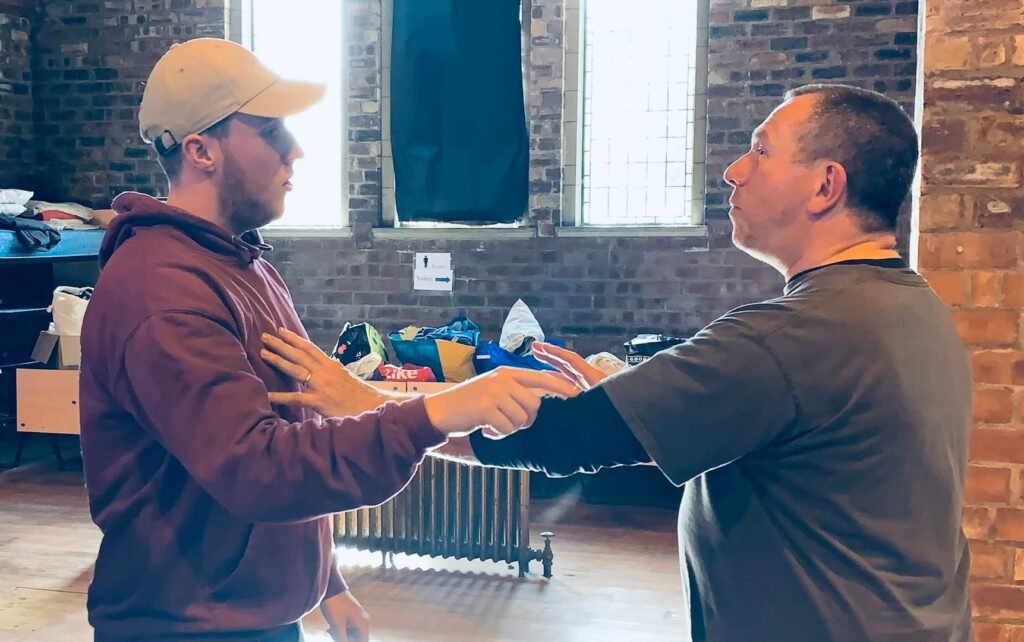
At Dynamis, our commitment to enhancing workplace safety extends across various sectors, with our work in the asylum seeker accommodation sector standing as a testament to our expertise and tailored approach in conflict management and personal safety training. Since our founding in 2006 in Edinburgh, we’ve been dedicated to protecting those who serve others, and our collaboration with asylum-seeker housing support and welfare teams exemplifies this mission.
The asylum seeker accommodation sector operates in a highly specialized environment, providing crucial housing and welfare support to asylum seekers – individuals often experiencing significant trauma, cultural displacement, and uncertainty. Frontline staff regularly enter situations with heightened emotional tensions, language barriers, and complex needs. These circumstances create unique personal safety challenges that require specialized training solutions.
Our approach in this sector begins with a comprehensive assessment of specific operational contexts. We recognize that teams need more than generic conflict resolution skills; they require strategies that acknowledge the sensitive nature of their work and the diverse populations they serve.
The training programs we develop for AASC (Asylum Accommodation and Support Contract) Housing and Welfare Teams focus on several critical areas:
The implementation of our training across teams in this sector has yielded significant positive outcomes:
Our work in the asylum seeker accommodation sector aligns with our broader experience in supporting community-based teams. As we’ve seen in our partnerships with organizations like Peterborough City Council Enforcement Officers and Adult Social Care, professionals working in community settings face unique challenges that require specialized training approaches.
The training we provide emphasizes treating every person with dignity and respect in every encounter – a philosophy that resonates deeply with the sector’s own values and the sensitive nature of their work with vulnerable populations.
As we continue our work in the asylum seeker accommodation sector, we remain committed to evolving our training to meet changing needs. The dynamic nature of this work requires constant adaptation, and our ongoing collaboration ensures that teams are equipped with the most effective, up-to-date strategies for maintaining safety while delivering essential services.
At Dynamis, we believe that effective training doesn’t just protect individuals – it transforms how organizations approach their work. Our partnerships in this sector exemplify this transformative potential, creating safer environments for both staff and the vulnerable populations they serve.
Through comprehensive training, practical skills development, and ongoing support, we continue to help teams in the asylum seeker accommodation sector work skilfully with vulnerable people, demonstrate appropriate compassion, de-escalate high-stakes encounters, and keep all stakeholders safe – fulfilling our shared commitment to dignified, respectful, and safe service delivery.
Download our Positive Handling starter guide for schools.
Ready to explore Positive Handling training for your staff team? Let’s talk today.
What do you need? Use our simple tool to find the most relevant training and support options for your role, sector and challenges.