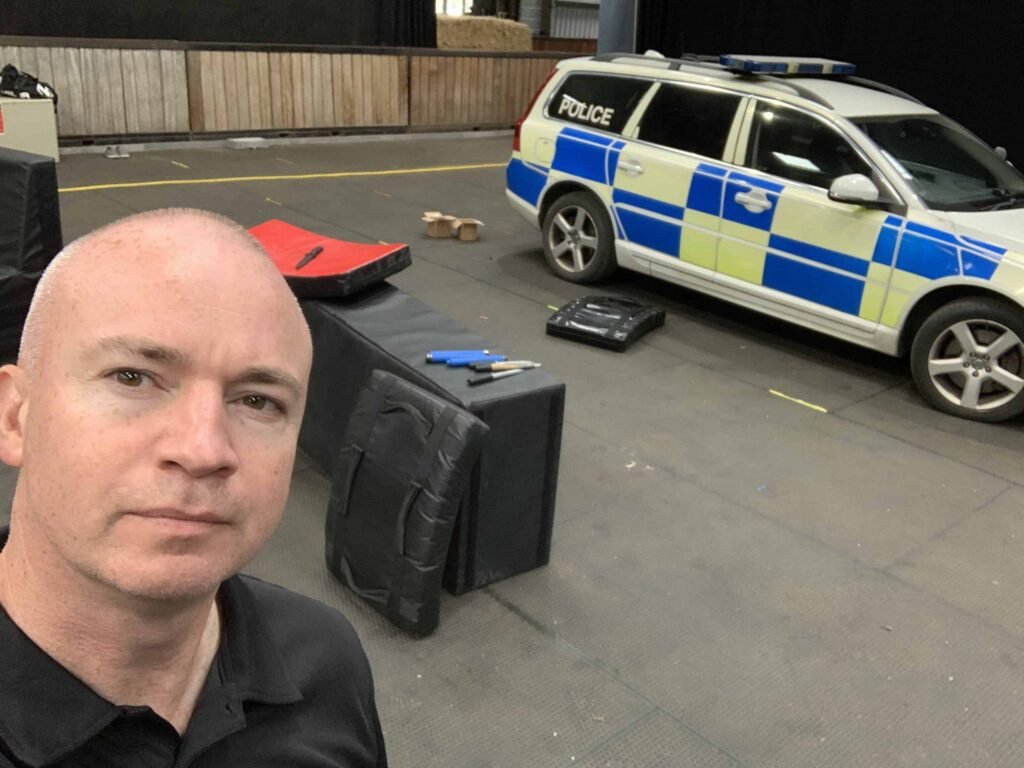
Case Study – Avon & Somerset Police

The new Public and Personal Safety Training (PPST) represents a transformative shift in police officer training, moving away from traditional, fragmented instruction towards a dynamic, scenario-led, and student-focused approach. This “once in a generation change” aims to underpin public confidence and address long-standing criticisms regarding new recruits’ engagement and hands-on skills.

Context and Rationale for the New Training

The impetus for this overhaul stems from significant concerns around officer and staff safety. A 2018/19 review, prompted by an increase in recorded assaults against officers and staff, revealed widespread dissatisfaction with existing training. Over 40,000 officers surveyed reported high rates of assault, with 88% experiencing an assault during their careers and 39% in the last 12 months, leading to substantial sick leave. A notable 34% were “very dissatisfied” or “fairly dissatisfied” with their training.

In response, the College of Policing, in partnership with the National Police Chiefs’ Council (NPCC), developed the new PPST curriculum, emphasising improved officer safety, satisfaction, and consistency. The core pedagogical approach, designed by Professor Chris Cushion, is student-focused and prioritises decision-making proportionate to threat and risk, rather than being solely tactic-focused. This approach aims for more effective and inclusive training, allowing officers to decide on tactics based on their rationale, rather than a prescribed curriculum.

Key Features and Methodology

The new training is characterised by several innovative methodologies:

  • Scenario-Led Learning as a Vehicle for Learning: Unlike previous scenarios that functioned as tests, the new approach uses scenarios as a “vehicle for learning” with a clear end goal. This allows for the practice of a whole range of complex skills – physical, mental, and verbal – mirroring real-world situations. Trainers can simplify or exaggerate scenarios based on learner needs.
  • Rewinding and Repeating: A crucial element is the ability to “rewind the position to bring that learning outcome and go play again”. This provides an experiential learning opportunity to redo something and “make it better”. This immediate repetition and chance to self-correct significantly aids learning and confidence.
  • Building Failure into Scenarios: The training deliberately incorporates “no win” situations and failure into practice drills. This helps address an “overinflated view of their own capabilities” and serves as an “inoculation” – providing a controlled “dose” of challenging situations to prepare officers for real life, rather than letting them have a “moment of realisation in real life”. This concept, while liked, requires careful management at the start of the training day.
  • High Repetition and Speed: Scenarios are often “fast and fast moving,” with rapid transitions (e.g., “15 second, boom, 15 second next one, boom”). This maximises “contact time and mat time,” keeps learners enthused, and makes “time flew”. The high number of repetitions is seen as “really beneficial” for exploring different avenues and recognising the best options.
  • Layering and Complexity: Trainers can establish different “layers” within a role-play or scenario, allowing continuous progression and exposing learners to “multiple pockets of risk”. This moves away from a “very linear approach” to foster “360 awareness”.
  • Interleaving Learning: The sessions can dynamically switch between physical elements and knowledge-based topics like legislation, medical implications, powers, and policy, ensuring these crucial aspects are woven back into the scenario-based training.
  • Emphasis on De-escalation and Communication: The training focuses heavily on negotiation, de-escalation, interpersonal communication, and conflict management to resolve situations safely without resorting to force, thus limiting the need for police equipment. Officers are equipped to provide rationale and explain legislation, leading to a statistically significant 11% reduction in use of force during the pilot.
  • Environment and Resources: The importance of careful setup and space for scenarios, including using varied environments like cells, rooms, and even objects like broken bottles or furniture, is highlighted. This contextual environment drives student motivation. However, it also demands substantial resources, including “black wall” to maintain variety.

Trainer Feedback and Challenges

Officer safety trainers provided extensive feedback, highlighting both the benefits and the significant demands of the new system:

  • Shift from Instructor to Coach: Many trainers found the transition from instructing to coaching “really difficult,” noting a tendency to “talk over people” or “keep going into too much detail”. The methodology requires trainers to “step back and letting the reins… go,” allowing the scenario to facilitate internal debriefing by the learner rather than requiring an explicit debrief after each event.
  • High Trainer Knowledge and Preparation: The new approach demands “sky high” knowledge from instructors to “recognise and change stuff” and spot “teachable times”. Trainers need exceptional knowledge to programme activities and develop common drills. Adequate “preparation” time is essential, including having a repertoire of drills for common scenario issues.
  • Resource and Staffing Intensity: Trainers noted the “intensity of resourcing” required, especially concerning staffing numbers. While some felt more confident about managing group sizes (e.g., 1 to 6 or 7 ratio), the need for a “safety ring leader” was recognised.
  • CPD Gap: A significant “CPD gap” exists for trainers, especially for less experienced ones who might feel “uncomfortable” when put on the spot. There’s a strong call for “common drill” or “standardised drill” libraries and ongoing CPD opportunities, particularly as the programme rolls out quickly.
  • Managing Intensity and Student Motivation: Concerns were raised about the intensity levels being “watered down” by trainer and student motivation if the pace is too quick.
  • Safety Briefs: Trainers leading scenarios, particularly with people unfamiliar with the material, need to remember to give a more thorough safety brief.

Learner Feedback and Outcomes

The new training garnered overwhelmingly positive feedback from learners:

  • Increased Confidence: Learners reported “so much more confidence” by the end of the training, even those with minimal prior experience. The ability to quickly do different roles and rewind/replay scenarios boosts confidence.
  • High Engagement and Enjoyment: Learners found the training “way more enjoyable” than previous methods, describing it as “fast and fast moving,” which kept their interest and made “time flew”. One officer, with 23 years of experience, stated it was the “first time I’ve done a session on a domestic violence call that I’ve enjoyed”.
  • Faster and More Effective Learning: Learners noted picking up skills “a lot quicker” than before due to the teaching methodology. The “number of reps” was particularly beneficial for exploring different avenues and recognising the best options. New tactics were learned that can be implemented back in their forces.
  • Contextual Understanding: The scenario-led approach helped put learning into “more context,” making it “more whole” and providing a “definite understanding of how scenarios can be run”.
  • “Moment of Realisation”: The direct, no-hide environment of the training can lead to a “moment of realisation” for some officers that the job “is not for me” in a controlled environment, which is seen as a positive “inoculation”.
  • Fitness Benefits: Participants were observed “sweating but smiling,” suggesting the physical aspects could potentially improve fitness levels.
  • Injury Rates: The pilot in Avon and Somerset Police reported a 4.7% injury rate (96 out of 2,064 officers), with 4% being minor and eight significant injuries leading to time off work. This is acknowledged as a risk that forces should review to improve learning environments.

In conclusion, the new PPST offers a highly engaging, confidence-building, and effective training methodology, particularly for developing complex skills and promoting de-escalation. While it demands significant adjustments from trainers and requires robust resource and support structures, its potential to produce more competent, safer officers, and to enhance public trust is substantial. The ongoing commitment to CPD and addressing implementation challenges will be crucial for its long-term success.

Guides

Download our Positive Handling starter guide for schools.

Contact Us

Ready to explore Positive Handling training for your staff team? Let’s talk today.

Book in a 1-2-1 Meeting

Find Your Solution

What do you need? Use our simple tool to find the most relevant training and support options for your role, sector and challenges.