When interacting with young people in schools or on the street, a ‘Status Seeking Display’ could unfold like this:
- Young person feels disrespected/a loss of status during an interaction with the team;
- Young person fosters resentment in the minutes, hours, days afterwards;
- Young person thinks about how to get revenge, retaliation or retribution;
- …many other factors combine in a perfect-storm of bad decisions…
- Young person puts a knife in their jacket and thinks about using it;
- Young person has another bad interaction with the team, triggering over-reaction;
- Young person suffers catastrophic loss of all self-control and
- Young person uses knife in an act of violence against an individual.
It all started with the perception of being shown respect, or not.
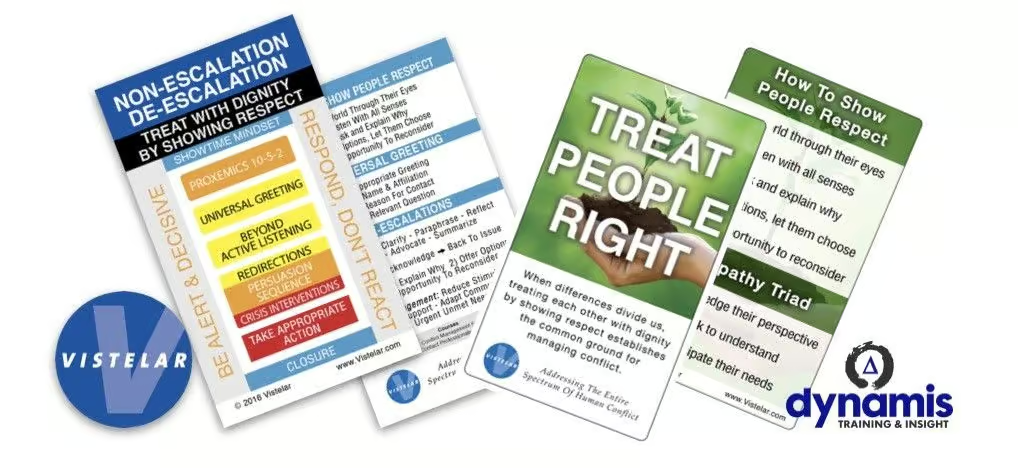
So, the vital question Dynamis addresses in all its training around de-escalation, conflict and personal protection becomes:
“How can we ensure that the young people we interact with are treated with dignity and are shown respect at all times, even when we are having high-stakes interactions with them?”
This is a real challenge. It’s a given that working with young people means difficult conversations need to be had. Sometimes the individual needs to hear things they don’t want to, or be persuaded to do things they’d rather not do.
We therefore need to be confident that our people are carrying the right values and tactics into those encounters – tactics and values which foster a non-violent environment.
The safest way to do this is to have a consistent standard for our interactions with people, based on excellent verbalisation skills and communication strategies.
Even when we are writing people up for violations, or presenting them with the consequences of their negative behaviour, we need to do it in such a way that they believe they have been treated fairly, according to procedure, with empathy and were at all times allowed their dignity – that the person dealing with them was respectful.
Gary Klugiewicz, co-founder of the workplace conflict management company Vistelar, points to the concept of ‘procedural justice’ as a waypoint towards this goal:
“Procedural Justice…states that how a person feels they were treated during an interaction has more to do with how they view the event than the final outcome of the encounter.”
Procedural Justice, sometimes called ‘Procedural Fairness’, encompasses whether a person believes that a law or rule is fair, whether the enforcement services enforce the law or rule fairly and, crucially, whether a person feels that the enforcer carries out the process in a respectful way that allows them to retain their dignity.
Procedural justice is therefore an issue of perception. It is decided by how an individual feels about the way a staff member interacts with them; this will have a great impact on whether they believe there was procedural justice, and hence legitimacy, to the interaction.
To maximise the likelihood of positive outcomes for teams of contact professionals concerned about their risk from knife crime or knife assaults, it’s vital to examine the quality of the interactions and relationships with young people as a preliminary step in assessing training needs. Dynamis can support you with this process – book a call with us.
In addition, Dynamis’ Conflict Management training course covers all of the elements of verbal communication mentioned above, in which we work with you to create a supportive atmosphere and one in which conflict is not escalated or is de-escalated appropriately.