
CONFLICT MANAGEMENT
Your teams need effective, engaging and efficient conflict training to help them with vulnerable or volatile people they meet in your workplace. Trust Dynamis.
Prevent
Resolve
Apply verbal and non-verbal
de-escalation techniques.
Succeed
Protect safety and be professional
under pressure.
Sustain
Conflict Risks...
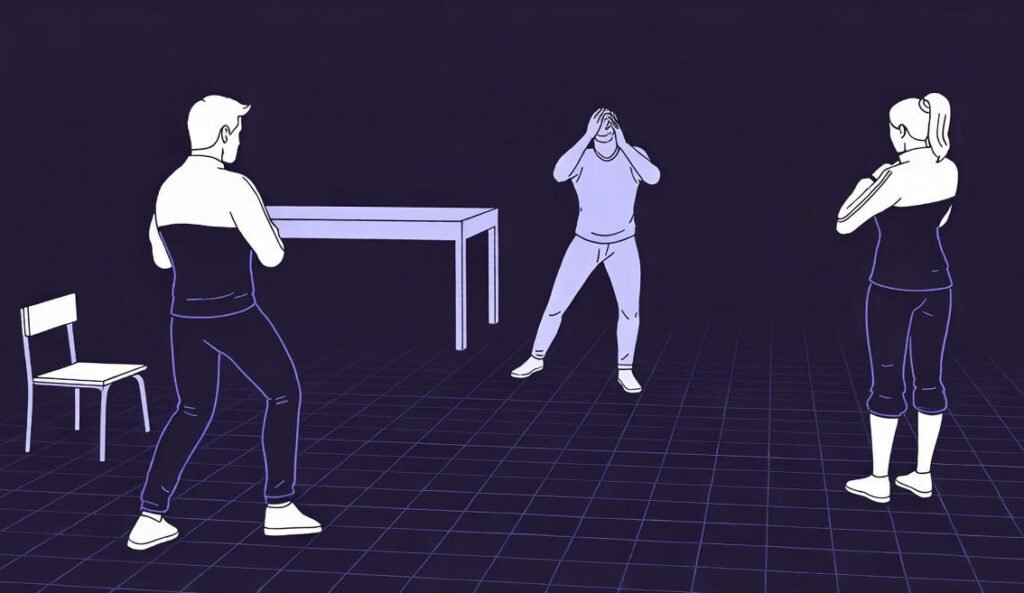
Unmanaged conflict can damage trust, increase staff turnover, and create unsafe environments for staff and the people you serve.
01
Your People
02
Your Culture
03
Your Reputation
Benefits
Built on current research, tailored to your risks, and delivered by experienced professionals.
Legal insights
Understand the law, policies, and your rights when managing conflict..
Science-backed Skills
Learn tested verbal and non-verbal de-escalation strategies.
Scenario-Driven and Sticky
Practice with realistic, role-played workplace situations.
Sustained Support
Ongoing tools and resources to embed learning.
Course Outline & Goals
Develop the awareness, judgement, and practical skills needed to prevent, manage, and survive high-stakes conflict encounters.
Course Title
Conflict Management: Evidence-Based Training for Professional Interactions
Course Aim
To equip professionals with the knowledge, understanding, and practical skills needed to identify, prevent, and manage conflict situations effectively, treating everyone with dignity and respect while ensuring safety for all parties involved.
Learning Outcomes
By the end of this course, participants will:
Know:
- The legal frameworks and context for managing conflict in professional settings
- The definition of ‘violence at work’ and relevant workplace policies
- The timeline of crisis escalation and stages of conflict
- The core principles of non-escalation, de-escalation, and crisis intervention
- The ‘social contract’ concept that establishes shared expectations of dignity and respect
- The principles of reasonable force and their application when verbal strategies fail
Understand:
- How treating people with dignity by showing respect forms the foundation of conflict management
- The importance of self-control and emotional regulation (the “Showtime mindset”)
- How proxemics and body language influence conflict situations
- The impact of alcohol, drugs, and weapons on situational risk
- The ethical considerations in managing conflict professionally
- How cognitive difficulties (including intoxication, mental health issues, or learning difficulties) affect communication
- The value of scenario-based practice in developing conflict management skills
Be able to do:
- Apply the core principle that “all people respond to being treated with dignity” in difficult situations
- Implement effective pre-planned responses to common conflict scenarios
- Demonstrate alert and decisive behavior through situational awareness
- Establish rapport and utilize active listening skills
- Apply persuasion techniques and offer options to gain voluntary cooperation
- Redirect negative behavior effectively
- Recognize and respond appropriately to communication needs
- Employ appropriate verbal and non-verbal de-escalation strategies
- Respond professionally rather than react emotionally to anger triggers
- Apply appropriate physical safety skills when necessary (if included in the training format)
Course Duration
- Full-day (6 hours): Comprehensive conflict management skills
- Half-day (3 hours): Conflict Management Fundamentals
- Two-day option: Adding personal safety/lone-working physical skills for higher-risk environments
- Online options: 2-4 hour Zoom sessions with live instruction
Target Audience
- Public-facing staff in healthcare, education, retail, transport, and utilities
- Community-based and lone workers
- Customer service teams
- Security personnel
- Any professional who may encounter conflict situations
Learning Methodologies
- Scenario-driven training using the SCENA approach (research-informed and evidence-based)
- Practice-based exercises that replicate real workplace encounters
- Interactive role-playing of common conflict situations
- Video case studies and analysis
- Small group problem-solving activities
Tailoring and Relevance
Training is specifically designed based on a thorough Training Needs Analysis to address your organization’s unique environment and the types of conflict situations your team encounters regularly.
Legal and Medical Review
All training content is regularly reviewed and updated to align with current legislation and best practices, meeting the high standards required by the Institute of Conflict Management accreditation.
Trainer Qualifications
Delivered by qualified and experienced conflict management professionals certified through the Institute of Conflict Management (ICM), ensuring high-quality instruction and relevant expertise.
Resources Provided
Participants receive comprehensive reference materials and have access to ongoing support for implementation of learned skills in the workplace.
Certification
All participants who successfully complete the course receive certification recognized by the Institute of Conflict Management.
Course Title
Advanced Strategies in De-escalation: A Masterclass for Challenging Situations
Course Aim
To equip staff working in acute, intensive care, and emergency department environments with advanced knowledge, understanding, and practical skills to effectively manage challenging situations involving people with acute mental health difficulties, using trauma-informed approaches that preserve dignity while ensuring safety.
Course Duration
2 days
Target Audience
Healthcare professionals working in PICU, acute, and emergency department settings who may encounter people with acute mental health difficulties, including nurses, support workers, security personnel, and clinical staff.
Learning Outcomes
By the end of this course, participants will:
Know:
- The Seven Phases of Crisis (Kaplan Wheeler) and how they manifest in acute mental health situations.
- Legal frameworks including duty of care, necessity, and proportionality in healthcare settings.
- Risk factors and warning signs specific to escalating behaviours in people with acute mental health difficulties.
- Gateway behaviours that indicate potential escalation.
- Trauma-informed approaches and their evidence base.
- The relevant aspects of the Human Rights Act as they apply to healthcare interventions.
- The SCARF Model and its application in managing distressed individuals.
- The proper response protocols when called to disturbances in healthcare settings.
Understand
- The principles of trauma-informed care and person-centred approaches for patients with acute mental health difficulties.
- The importance of staff wellbeing and emotional equilibrium when managing challenging situations.
- The difference between conflict and crisis behaviours in patients with mental health difficulties.
- The ethical considerations in avoiding coercion and blanket restrictions in acute care environments.
- How trauma affects a person’s behaviour and responses during crisis situations.
- The difference between emergency and planned interventions in mental health care settings.
- How to recognise when team members may need assistance to remain professional.
- Decision-making processes under pressure in high-stakes healthcare encounters.
Be able to:
- Identify early warning signs and gateway behaviours to prevent escalation.
- Apply advanced de-escalation and non-escalation techniques in complex situations.
- Use trauma-informed and person-centred approaches to defuse risk and preserve dignity.
- Communicate and coordinate effectively as a team during incidents.
- Reflect on incidents using structured tools for personal and organisational growth.
- Maintain emotional equilibrium and support wellbeing for both staff and patients.
- Take appropriate action when verbal methods fail, knowing legal and safety boundaries.
- Approach and engage persons with cognitive difficulties using the five-step crisis intervention pathway.
- Implement the “First Responder Philosophy” for proper incident management.
- Intervene ethically when professionally difficult situations arise within the team.
Learning Methodologies:
The course utilises a variety of teaching methods including classroom instruction, practical role-play, realistic scenario-based practice, and hands-on skills development. Participants will engage with lived experience experts and practise in contexts specifically designed to reflect the unique challenges of acute, intensive care, and emergency department environments. The SCENA approach (Scenario, Coaching, Engagement, Non-linear learning, and Assessment) ensures transfer of skills to real-world operations through progressively complex scenario practice.
Tailoring and Relevance
This training is specifically designed and tailored to the unique roles, tasks, and problems faced by healthcare staff working in high-pressure environments with patients experiencing acute mental health difficulties. Scenarios and examples are drawn from PICU, acute care, and emergency department settings, including situations involving bereavement, delirium, psychosis, and trauma. The course addresses specific challenges such as managing patients who may be highly distressed, paranoid, or experiencing psychotic episodes.
Legal and Medical Review
All content is tactically effective, legally correct, and medically safe, with specific attention to the particular risks and considerations present when working with people experiencing acute mental health difficulties in healthcare environments. Training includes awareness of risks of sudden death proximal to restraint and emphasises the importance of maintaining safety while respecting human rights.
Trainer Qualifications and Credibility
The course is delivered by expert facilitators from Dynamis and Vistelar with decades of experience in conflict management, trauma-informed practice, and advanced de-escalation, trusted by NHS Trusts and other leading healthcare organisations. Our trainers have demonstrated expertise in brain injury, empathic communication, and the physiology of threat response.
Resources Provided
Participants receive comprehensive course materials, reference guides for post-training implementation, and access to ongoing support resources to reinforce learning after the course. Takeaway tools include pocket reference cards, access to short reinforcement videos, and brief team-based exercises that can be implemented in the workplace.
Monitoring and Evaluation Plan:
The effectiveness of the training is measured through participant satisfaction surveys, pre and post-course knowledge assessments, and follow-up evaluation of incident rates and staff confidence levels in the workplace. Success will be measured by improved patient experience, reduced incidents, decreased staff injuries, and enhanced staff confidence and morale.
Reinforcement and Ongoing Learning
Learning is reinforced through structured debriefing tools, team reflection practices, and ongoing support resources that help maintain skills and prevent complacency over time. A programme of sustainment ensures both short-term impact and ongoing sustained improvement in your healthcare environments, with champions identified to help embed the learning within teams.
Course Title
Crisis Management: Supporting Vulnerable and Volatile Individuals with Dignity and Safety
Course Aim
To equip professionals with the knowledge, understanding, and practical skills needed to safely manage crisis situations involving vulnerable or volatile individuals, using trauma-informed approaches that maintain dignity while ensuring safety for all involved.
Learning Outcomes
By the end of this course, participants will:
Know:
- The Kaplan Wheeler Model of the seven phases of crisis behavior
- The SCARF Model for understanding social triggers
- Legal frameworks related to duty of care and personal safety
- Risk factors and warning signs of escalating behavior
- Trauma-informed approaches to crisis intervention
- The core principle that “all people respond to being treated with dignity by showing them respect”
- The five ‘special needs strategies’ for individuals with cognitive difficulties (temporary or long-term)
Understand:
- How to recognize early signs of escalation in vulnerable or volatile individuals
- The impact of proxemics and body positioning in crisis situations
- The importance of team-based responses to high-risk behaviors
- The balance between providing care and ensuring safety
- The ethical considerations when working with vulnerable individuals
- The neurobiological basis of crisis behaviors
- How personal triggers can impact professional responses
- The difference between emergencies and planned interventions
Be able to do:
- Apply effective pre-planned responses to crisis situations
- Demonstrate appropriate verbal tactics and behaviors for encounters with distressed individuals
- Execute dynamic risk assessments in real-time scenarios
- Implement non-triggering communication strategies
- Apply trauma-informed de-escalation techniques
- Maintain emotional equilibrium under pressure
- Correctly position themselves to maximize safety when approaching volatile individuals
- Apply appropriate physical protective interventions as a last resort (if included in training format)
- Document incidents appropriately for legal and organizational requirements
Course Duration
- Full-day (6 hours): Comprehensive crisis management skills
- Optional additional day for physical protective interventions (where appropriate)
- Blended learning options with online pre-learning (90 minutes) and in-person practice
Target Audience
- Healthcare professionals
- Social care workers
- Educational staff
- Security personnel
- Public-facing workers who encounter vulnerable or volatile individuals
Learning Methodologies
- Scenario-driven training using the SCENA approach
- Practical role-playing of common crisis situations
- Video case studies and analysis
- Small group problem-solving activities
- Demonstration and supervised practice
Tailoring and Relevance
Training is specifically designed based on a thorough Training Needs Analysis to address your organization’s unique environment and the specific vulnerable populations you serve.
Legal and Medical Review
All training content is regularly reviewed and updated to align with current legislation and best practices, meeting the high standards required by the Institute of Conflict Management accreditation and SWC (Safety Without Compromise) endorsement.
Trainer Qualifications and Credibility
Delivered by experienced professionals with expertise in crisis management, trauma-informed care, and conflict resolution, certified through the Institute of Conflict Management (ICM).
Resources Provided
Participants receive comprehensive reference materials and access to ongoing support resources for implementing learned skills in the workplace.
Monitoring and Evaluation Plan
Course effectiveness is measured through practical skill assessment during training and follow-up evaluation of implementation in the workplace.
Reinforcement and Ongoing Learning
The course includes strategies for maintaining skills through practice and reflection, with optional follow-up support to ensure sustained application of techniques.
This course is built on the foundation of treating every person with dignity and respect, even in crisis situations. The scenario-based approach ensures that participants develop practical skills they can immediately apply in their work environments, resulting in increased confidence, reduced incidents, and better outcomes for both staff and the vulnerable individuals in their care.
Always-on support including CPD, micro-learning modules, and practical resources that keep your team confident, compliant, and ready.
From quick refreshers to deep-dive learning, our ongoing resources ensure skills stay sharp and aligned with your organisation’s safety and culture goals.
Proven Impact
Our conflict management programmes have reduced incidents by up to 40% in client organisations within 12 months.
Fewer incidents
Learner confidence
Policy alignment
Course rating
“The training was practical, engaging, and immediately relevant to our work.”
J. Smith, NHS
We Support You
From initial needs assessment to post-training follow-up, we ensure skills are learned, applied, and sustained.




How It Works
Simple, clear steps

Listen
Understand your risks and needs

Train
Deliver tailored, practical learning

Embed
Support ongoing capability
Case Study – PICU project

Frequently Asked Questions
Who is this training for?
Any professional who may encounter conflict, including healthcare, education, retail, utilities, and transport staff.
Is it accredited?
Yes. Courses are accredited by the Institute of Conflict Management (ICM).
Can it be tailored?
Absolutely — we customise content for your sector, risks, and scenarios.
Do you cover physical safety?
Yes, optional modules cover safe disengagement and lone working skills.
How is it delivered?
In-person, online live sessions, or blended learning — you choose.
Guides
Download our Conflict Management course overview.
Contact Us
Ready to explore Positive Handling training for your staff team? Let’s talk today.